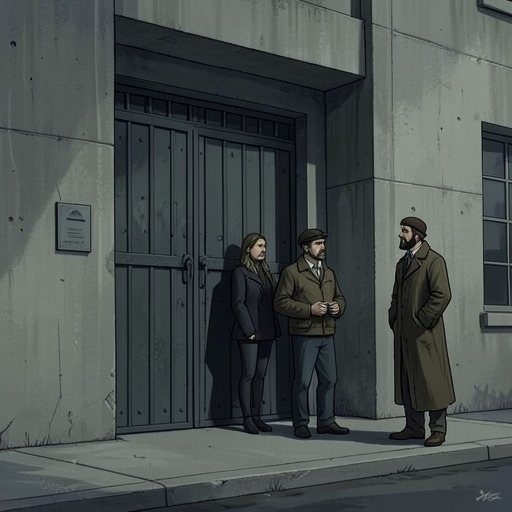
The Smiths' Residence
Mr. & Mrs. SmithThe Smiths' Residence is the suburban home Jane and John share, but it is never merely a domestic backdrop: it holds Jane’s aspirations and routines, conceals John’s weapons, and becomes the battleground where their private conflict turns physically destructive. Its transformation from a dreamed-of home into a ruined shell makes the marriage’s hidden life visible, then leaves the couple facing the loss of the world they had built there.
Home and Domestic Friction
Jane’s attachment to the house is personal and long-standing. She recognizes it as the home she had imagined as a young girl: a good neighborhood, a pleasant street, and a beautiful garden. When her own people search the house, she cannot even call out to stop them. The invasion is painful not simply because her possessions are disturbed, but because a place tied to her youthful hopes is being turned against her.
The kitchen is the clearest expression of Jane’s domestic competence and pride. She learned to cook because, as a child, she had to make her own meals or go without; as an adult, she brought the same drive for perfection to cooking that she applied elsewhere. John’s separate territory is the tool shed. Jane had never paid much attention to what he kept there or how often he went into it, until searching the shed became urgent. A single light bulb reveals a space so disorderly that her first impression is simply that it is a mess. The contrast between her cultivated kitchen and his neglected-looking domain marks how much of their shared home each spouse had kept outside the other’s attention.
Even an ordinary grocery mistake carries the strain of their domestic routine. John brings salted butter when Jane had asked for unsalted; she points out the error, then dismisses his attempt to apologize and says she will improvise. She changes the subject to new living-room curtains, while his brief reply leaves the exchange hanging. The scene makes household details do double work: butter and curtains are small matters, yet they expose the dissatisfaction and distance beneath the performance of an ordinary marriage.
A House with Concealed Rooms and Uses
The residence’s domestic appearance conceals a more dangerous function. Jane’s inspection of John’s tool shed begins as a search for something valuable, prompted by her discovery that he had a private domain she had never explored. The shed becomes a threshold between the home she thought she knew and the secret life hidden inside it. The contrast is sharpened by Jane’s own claim over the kitchen: each spouse has occupied a distinct part of the house without understanding what the other’s territory contains.
The house also turns the couple’s conflict into action. During their encounter, a small grenade drops from a ventilation opening and rolls across the floor. Its absurdly toy-like appearance prompts the comparison to a Barbie grenade, but there is no doubt that it is real; John calls out that Jane is dead. A household interior and an attack zone have become inseparable. The ventilation opening, ordinarily part of the building’s infrastructure, delivers lethal danger directly into the room.
The violence reaches the kitchen, Jane’s most cherished space. John fires as he moves toward the dining room, shattering glass, opening cabinets, and striking the teapot she treasured and its companion kettle. Jane pauses to take in the wreckage of appliances, cabinets, and decorations before turning toward him. The destruction is more than collateral damage: John has devastated the room that embodied Jane’s skill and independence, and the force of her response gives the domestic setting the emotional weight of a direct assault.
From Shared Home to Ruin
The house’s final destruction follows the couple’s escape from its interior. Grenades blow up the boiler and the basement, propelling them out through a door as flames lick at their heels. They run and crawl away, coughing and gasping, then turn to look back. The blast travels through the other rooms, and the structure shudders before collapsing into a smoldering heap.
The collapse destroys more than a building. Jane and John cling to one another as they watch the house fall, recognizing it as the embodiment of their old lives. The residence had held their carefully divided domestic worlds and the secrets that kept those worlds apart; now the explosion has destroyed both the concealment and the home that contained it. Its ruin gives physical form to the couple’s break with their former identities, even as their closeness in the aftermath suggests that they have not been destroyed along with the house.
Narrative Significance
The residence binds the story’s domestic comedy to its action-thriller violence. A complaint about salted butter, the pride invested in a kitchen, and the discovery of an unexplored shed belong to the same structure as a grenade falling through a vent and a house brought down by explosives. The shifts are startling, but they grow from the same premise: the familiar home is not fully known by either spouse.
Its changing condition charts the marriage’s exposure and rupture. At first the house signifies Jane’s dream of a settled life and the routines through which the couple maintain that appearance. As the spouses’ hidden identities surface, its rooms become contested territory; finally, its destruction makes their concealed past impossible to preserve. The residence is therefore both refuge and disguise, and its collapse marks the end of the shared life they had previously inhabited without truly knowing one another.